To help maintain a better consistency with modern browsers I have introduced a GlyphIcons font. This font adds some extra requirements to the browser that is viewing it but makes it much easier for me to develop for the future.
I found these icons just the other day and think they are awesome. You can find them in quite a few places on my site, least of all the sidebar and site links. You'll find that they make the success and failure pages much better too.
BalfBlog version 1.1 is my second major release to the public. It will resort back to the original plan/design of using query strings to post. I'm hoping to cut it to just two PHP files as a result of this: one for BalfBlog and one for the data and information. Ultimately, this may not happen, but it might.
More importantly, banner images will be removed as of version 1.1 (you should have received an email about this if you have downloaded BalfBlog in the last two weeks). Banner images were one of the first features to come to JBlogs back in the day but have since lost my interest in the development side of things - far too many complications.
Crucially, the new update will focus on the object oriented style introduced earlier in the year. The key focus within this project is to make the admin side of the blog easier to use.
The next few months will be a difficult few for me as I have to work much harder than normal on my university course.
Now in my final semester of my final year at university, I can finally see the end of it all and feel like I have the potential to finish it.
However, over this time I will likely end up neglecting my website and it's content. I may post a blog entry every so often but there will be no major content added to the site.
If you want to get in touch with me, feel free to contact me using the usual methods.
I'm very happy to announce today that I have now got my own 'mask icon' for my website.
Perhaps you have seen (if you use Safari on El Capitan) that many web pages get their own icons whilst others just get given the first letter of their title. Well now my website joins these sites.
Here is an example followed by my own mask icon.


So go on, pin my website to your Safari browser now to try it out!
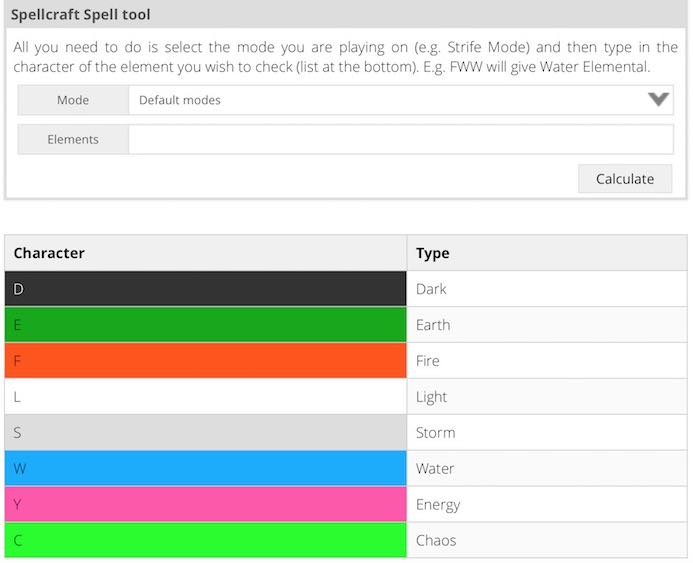
Very recently I created an online tool for converting Spellcraft elements into the spells that Spellcraft uses. It's reasonably simple but none the less I find it really useful. You can find it here.
Today I have decided as part of the refurbishment of my own blog, I will be removing the BalfBlog posts from my blog and putting them on the blog dedicated to my projects. This blog has also been running for some time and since it is the intended place for BalfBlog posts, this is where I will be putting them.
As well as this, I have chosen to move all of my posts about my Zenith Engine from my own blog to the ZenLang website and the blog dedicated to ZPE and ZenLang. I recently opened this blog but it has long been the aim to remove these from my blog.
I have plans to rename the blog dedicated to BalfBlog to my project blog, where I will put information about all of my main projects.
Since the day Apple announced that they were going to drop their skeuomorphic design patterns, everyone has tried to follow suit - me included.
Skeuomorphism is all about making your design look like something from the real world - something I aimed to do with my website by making it look like a page on your screen (I have since dropped this and moved to a much flatter design).
But why is it that skeuomorphism has disappeared all of a sudden and what really is it?
In this post, I'm going to talk a little about what a skeuomorphic design would look like and why flatter designs are much more convienient.
Skeuomorphism
By building a system with a real-life-like design using a skeuomorphic design pattern you make the learning curve much smaller: what looks like a microphone is a microphone. This means that more time ends up being on developing the interface than with a non-real-life-like version.
Skeuomorphism has however one drawback. Complication. Whilst yes it is true that skeuomorphism reduces time spent learning the interface, it also complicates the interface. Buttons may not be so obvious, taking for instance, a volume toggle which you rotate. This would be obviously complicated unless you knew how to use it before hand. This is an example of skeuomorphism at it's worst.
Skeuomorphism also tends to rely on images and gradients as well as other computationally complex elements (including rounded corners and the like). All of this adds to the time spent loading the interface.
This div below appears with a skeuomorphic interface.
'Flat interfaces'
Flat may not be the best word to describe these interfaces but it's a good one. Microsoft was one of the first companies to introduce a flat interface with Windows 8:
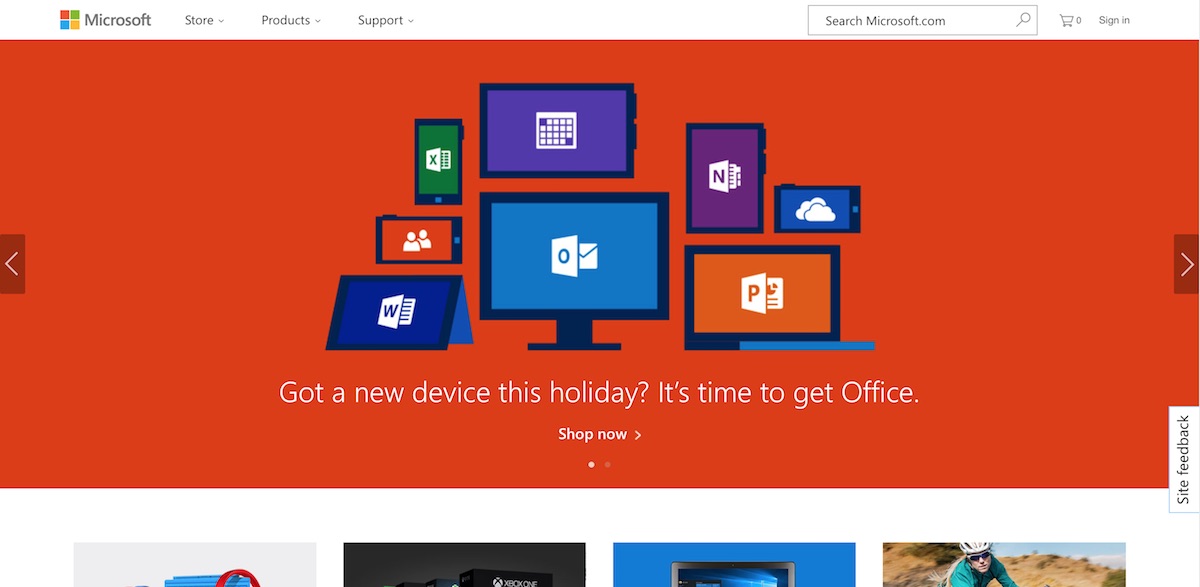
Microsoft's website is an example of a flat design
The main benefit flat interfaces have over skeuomorphic interfaces is that they tend to be easier to produce and then tend to be easier to render on the client system. Flat design rely less on images, gradients, curved borders, box shadows and a lot of the new CSS 3 styles that are being added and goes 'back to basics'.
The focus of a flat interface is contrast, making colours the dividers, not box shadows. It also focuses on solid colours, not gradients. And finally, it attempts to make the interface more rectangular than circular (on this note, I may be changing my logo from the orb design to a more square design).
Below is an example of a flat interface (and also happens to be the style of the buttons on my website):
Flat designs do have a few problems however. The first and foremost obvious failing of these designs is that it is difficult to give it a personal feel. Almost all flat designs are in some way or another similar to the next. This ultimately is why flat designs work well however, since they are very easy to understand and are now commonplace.
More importantly, there is less of an oomph of feeling for the website. Since it can be difficult to make a flat design interesting and not just another boring website, it is very difficult to build a flat design effectively (I do not believe I've got my flat design perfect yet).
The future
The future may see the world go back to a skeuomorphic design again and like all designs, flat interfaces may only be a phase.
Whether or not the design will disappear or not, the design is here to stay for now.
The following image inspired me to write about this:
This image came from Web Designer Depot
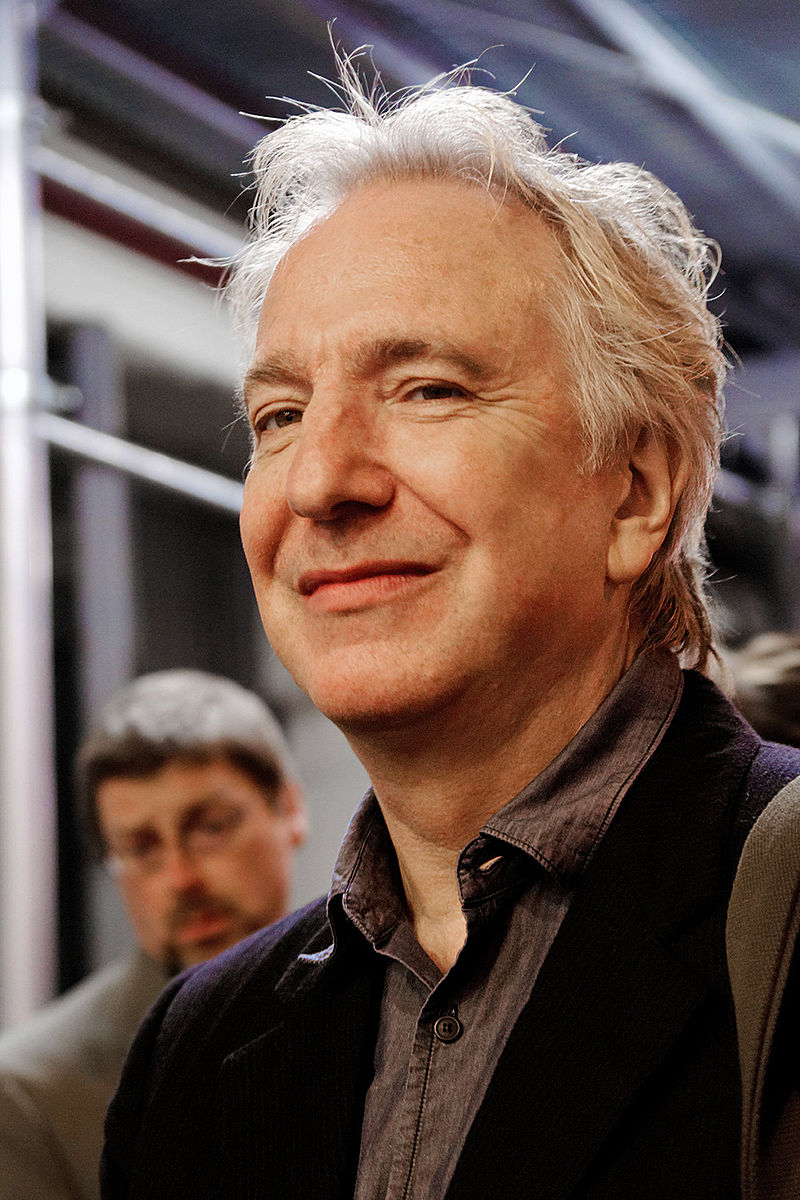
Alan Rickman by Marie-Lan Nguyen is licensed under CC BY 2.0.
It seems that I am constantly writing these tributes to favourite actors year upon year. This tribute is to the wonderful Alan Rickman, whose voice is was so distinct and made him one of those stand out actors.
To me, Alan Rickman was one of my favourite actors (as you'll observe if you visit the About me page on my website).
He starred in several favourite films of my own. His role in the Harry Potter series as Severus Snape was perhaps his most prominent but he also played the fantastic baddy Hans Gruber in the original Die Hard film and the Sheriff of Nottingham in the Kevin Costner Robin Hood: Price of Thieves film.
He also played Harry in Love Actually, another favourite film. And I nearly forgot, he also did the voice of the Blue Caterpillar in the Alice In Wonderland films by Tim Burton, where he starred along side another favourite actress of mine, Helena Bonham Carter. Alice In Wonderland also happens to be one of my favourite films and I'm looking forward to the next film in the series.
Alan Rickman's role in the films he was in was what made him the brilliant actor he was, he starred in so many great roles and never ceased to be a great actor. He will be missed dearly by fans and family, but let's remember he was a brilliant actor who managed to star in some roles that not many others could have pulled off, particularly Severus Snape.
I'm very happy to say that JBlogs has finally got a new name that I of course like. BalfBlog is the same product but it's just got a new name. I hope you all like the name. I will put an updated version up as soon as it's ready.
My collection of projects for the web designed for my own website and designed to be easy to use elsewhere too, is currently known as my Web Neutral project. It will continue to use this name but with the prefix Balf in front of it.
My Web Neutral project currently consists of:
- JBlogs (my blogging system)
- JBBar (my jQuery dropdown menu plugin)
- JBSlider (my jQuery slideshow plugin)
- JBPopup (my jQuery popup plugin)
- JBRibbon (my jQuery ribbon tab plugin)
Currently all of these start with my initials: JB. All of these will be renamed to drop this prefix in favour of my nickname from school; Balf. So: JBlogs becomes BalfBlog, JBBar becomes BalfBar, JBSlider becomes BalfSlider, JBPopup becomes BalfPopup, JBRibbon becomes BalfRibbon.
I will begin changing these soon, since many of them will affect several places on my own website even.
I am also adding this post under a new category on my blog called Web Neutral Project where you can find information about these web projects.