
In 2013, my brother made my original logo, which has remained the style of my branding for 13 years. It was updated and refreshed by an ex-pupil of mine who told me one day he had redesigned my logo and asked if I wanted it. I adopted that logo from mid-2024 onwards, and it has remained the main logo since.
This weekend I had a think about the refresh that I am planning for my whole website and came up with the idea of creating a new logo for it on Friday.
Without further ado, here's my new logo.
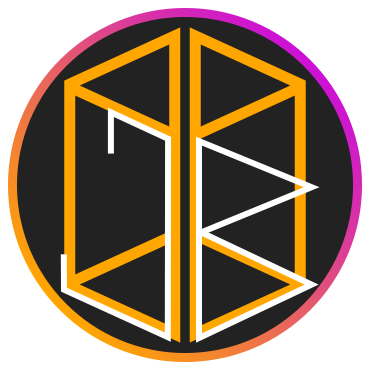
It's designed to represent structure, creativity and flow, as reflected in the hexagonal shape, choice of colours and the flow of characters. I hope you like it!
ZPE 1.14.10 is scheduled for release on Friday. Some of the key new features:
- Natural-language code generation: describe a program in plain English with
--generate, then run it or compile it natively. - ZenLang support: load, cache, validate, and execute custom languages defined with JSON.
- ZenC native compilation: compile supported YASS programs directly into fast, standalone native executables.
- Expanded binary and resource support: work with in-memory byte streams and binary resources through File and Image objects.
- Improved native UI: better cross-platform startup and native bridge handling.
- New configuration and documentation tools: inspect configuration as JSON and access compiled-program documentation through
--man.
Seriously, what happened to handing your CV over and that was it?
In the last few months, I've noticed that many companies think it's a good idea to have their own application form for submitting your job details (and some of them ask for your CV as well). This makes the process slow and actually has deterred me from applying for some jobs, and I'm not alone.
A very recent UK survey from CV-Library's 2026 Candidate Behaviour Barometer found that 71% of candidates have abandoned an application because it was too long or complicated. From this article:
- 45% are frustrated at having to repeat information that's already on their CV.
- 37% complain about lengthy application processes.
- 30% dislike having to move between different websites/accounts.
- Among IT and Technology candidates, 60% complain about having to repeat information already on their CV.
- And an enormous 81% of IT/Technology candidates have abandoned a long or complicated application.
As a former teacher, one of the worst things about it was the 4,000-character limit personal statement, but then also having to repeat your history and work experience, your PVG status, your criminal record stuff - all of which could really just come from a single PDF of my CV, which I have spent a lot of time tweaking to perfection.
One thread on r/UKJobs is titled "Employers asking you to re-enter your CV on their application." The poster states that companies ask for a CV and then make them manually enter their name, previous jobs, qualifications, etc. One of the most upvoted responses complains about uploading a CV, having the system autofill it badly, and then spending half an hour fixing it.
What I find particularly interesting is the disconnect between employers and applicants. In that 2026 CV-Library research, 96% of recruiters described their application process as streamlined or fairly efficient, while 71% of candidates said they'd abandoned a long/complicated application. Only 2% of employers/recruiters admitted their process was too long or complicated.
It's not great because it also means that some stuff will get left out, like my awards, for example; there's never anywhere to put them. And the awards on my CV are quite important to show off my successes - digital development specialist of the year, Watt Club Prize - the highest award in Heriot-Watt, merit awards and best student awards all the way through my time at uni.
So the thought I get of "I quite like this job, but I cannot be bothered going through this application system" is not unheard of, and apparently roughly 4 in 5 people applying for IT/technology jobs have reached that same point with at least one application.
It is an astonishing statistic when employers simultaneously complain that it's difficult to attract good technical candidates.
So why do companies do this?
Mostly because the application form is designed around the recruiter's systems and workflow, rather than around the candidate.
A CV is excellent for a human reader, but inconvenient for a database. Every CV has a different layout. One person writes "Software Engineer — 2018–2021"; another uses a table; another groups experience by project. An Applicant Tracking System (ATS) would prefer neat fields such as employer, job_title, start_date, end_date, qualification, etc.
That lets recruiters search, filter, report on and compare applicants.
You read it right, my website has now hit over 100,000 visitors a month. I only just noticed back in June that I was getting over 85,000 visitors each month, averaging around 7,500 per day. These are genuine visitors too, not bots or AI agents, people. And over the past few weeks, I've also received quite a few comments on my website via the contact form, particularly about my courses and reviews.
I had one last week commenting on how useful my courses on HTML and CSS have been to help that person start building a webpage:
Thank you for your HTML course and your CSS course. Both of these have really helped me learn some new stuff with webpage development.
I do constantly get comments on my reviews as well. In addition, I noticed that ZPE had hit over 1,000,000 downloads when I checked this month - I don't know when that happened, but that's a good place for it to be.
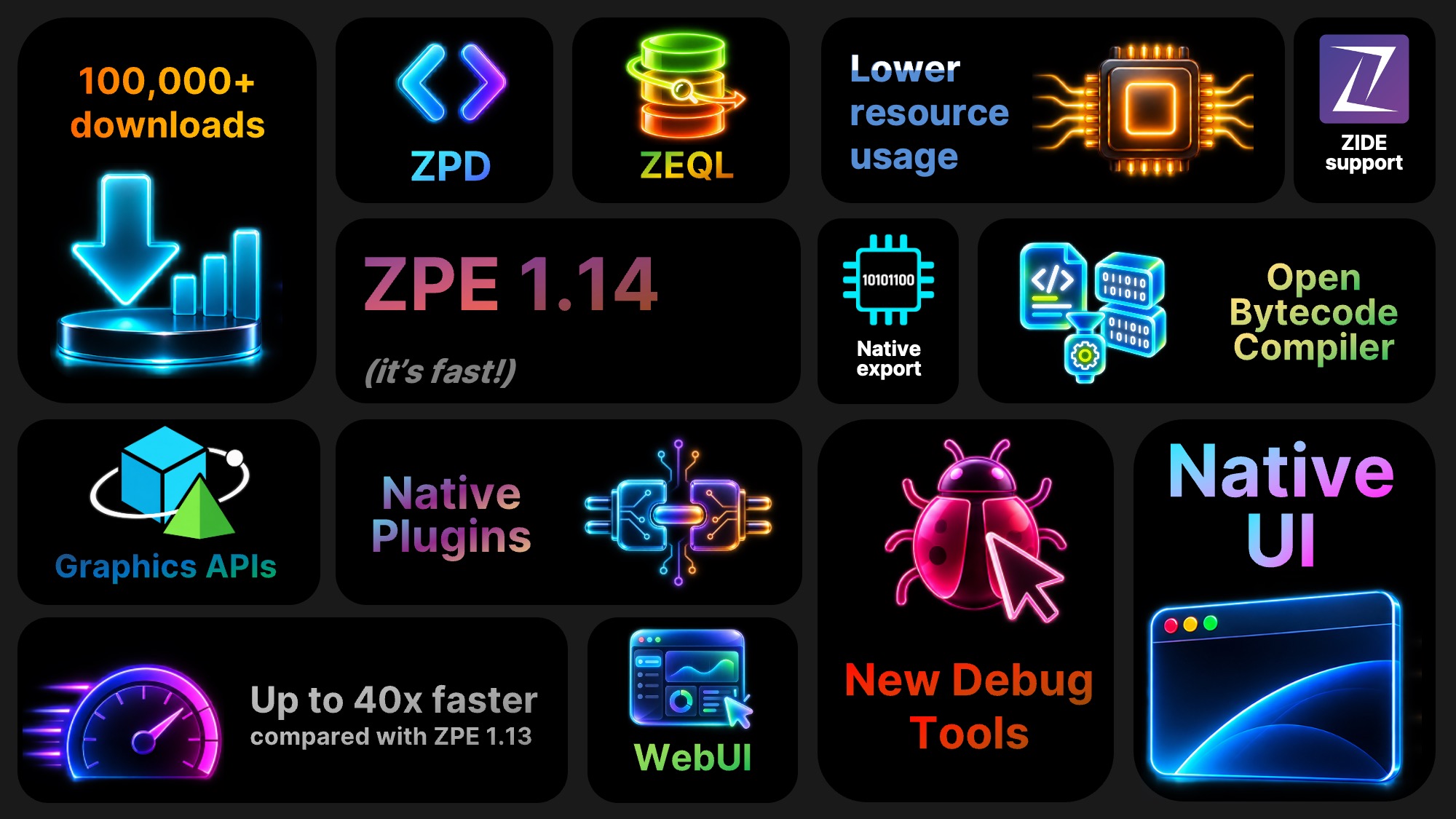
There have been plans for a while to include a new native graphics library in ZPE that will leverage OpenGL and, in some cases, lower-level graphics APIs. The plans are currently just plans, but it's now been identified as something I can build into ZPE.
This will be available to YASS within the year. It will also be available to any other programming languages that use the ZPE Core, including the newly added support for defining formal language syntaxes in ZIDE.
ZPEX remains the fastest and most capable version of ZPE, especially now that ZPE has introduced its new Native UI and Native Plugin features. The latest versions of ZPEX are published daily for the three largest operating systems ZPE supports.
ZIDE or ZPE IDE is a powerful new IDE that I've been developing for quite some time. It's powered by ZPE and takes a lot of what makes the ZPE built-in editor so powerful. ZIDE is designed to support multiple languages and runtimes, whilst being flexible and yet powerful.
But what's really awesome is how many features ZIDE now has; here's a list of my favourites:
- Git and GitHub integration
- ZPE Online
- AI Assist and AI Build
- Full error detection
- Debugging tools including breakpoints and stepping through code
- A built-in terminal
- Proper syntax highlighting for both ZPE/YASS and Zpeedy
- Python support - code highlighting, error detection and runtime support
- MD support
Tomorrow marks my final day as a teacher. While I'll still be doing some supply teaching over the next few days, this feels very much like the end of a significant chapter in my life.
Looking back over the past eight years, I can honestly say that teaching has been an incredible experience. I've met some fantastic people along the way, worked alongside dedicated colleagues, and had the privilege of teaching so many wonderful young people. There have been countless moments of laughter, pride and genuine joy that I'll carry with me for years to come.
I've also done quite a bit as a teacher, developing over 200 lessons' worth of materials, including slides, worksheets and supplementary materials. I have taught my area of expertise in computing and have gone above and beyond expectations in my subject knowledge, for example, when discussing interpreters and compilers or agile methodologies. I have led the school's digital champion program (not at my current school, but it was on the cards) and increased computing numbers (for example, from 8 pupils to 51 in one year). I developed my own slideshow engine, DragonSlides, which allowed pupils to join interactive lessons where they answered questions or completed tasks on the slides as we went through them as a class. I developed DragonDocs, which provided pupils with much more interactive worksheets and assessments. DragonDocs also uses AI-based, context-aware marking to ensure marking is fair and equal for all.
Of course, it hasn't all been easy. Like anyone who has spent time in education will understand, there have been challenges, frustrations and difficult periods that tested me both professionally and personally. Some of those moments brought me down and made me question whether I was on the right path.
Despite that, as I reach the end of this journey, it isn't the challenges that stand out most. Instead, I find myself looking back with a real sense of gratitude and, if I'm honest, a little sadness. Eight years is a long time to devote to something, and teaching has shaped a huge part of who I am.
While I have made the decision to move on, I leave with far more good memories than bad ones. I'm thankful for the people I've met, the lessons I've learned, and the experiences that have helped me grow. As one chapter closes and another begins, I'll always look back on my time in teaching fondly.
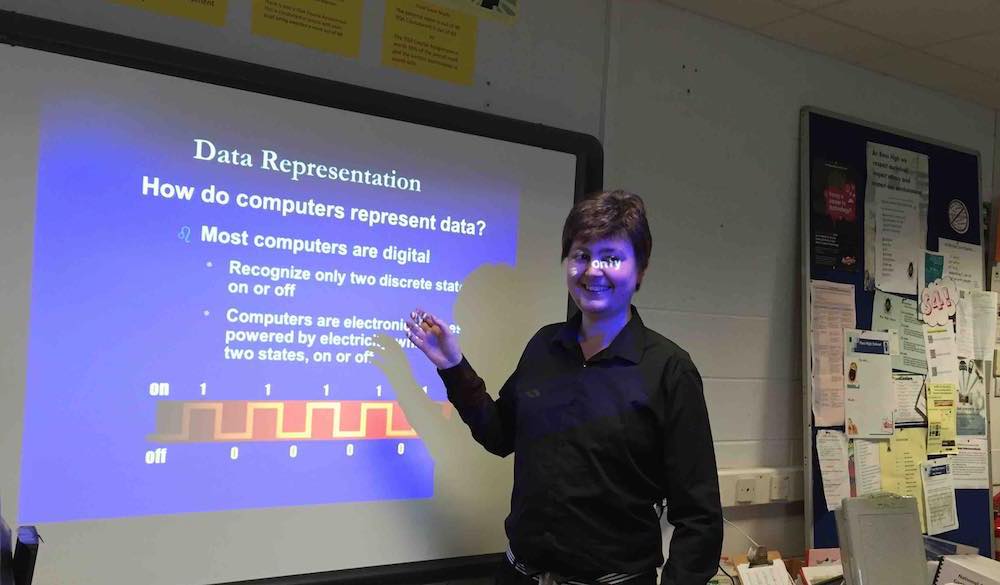
Me teaching back in 2016
As I posted on my Bluesky account earlier this afternoon, I'm now using GitHub Actions to automate the deployment of ZPEX, native ZPE plugins and the plugin bridge for ZPE.
Not only does this mean they're easier to build since I don't need to maintain three machines to compile on, but it also means deployment is smoother and more continuous integration. On top of that, ZPEX, native plugins and bridge updates are all automatically pushed to my website (or, for the bridge, pushed into the next version of ZPE).
The goal over the next few weeks is to ensure tight integration of the new GUI and the new plugin system with both ZPE and ZPEX. I also intend to build every ZPE plugin this way over the next few days, especially since it's now so easy and automated.
ZPEX has long held the banner for performance and, more recently, has outperformed PHP and Python in the latest performance tests. However, its compatibility layer with ZPE plugins has always plagued it, meaning it wasn't a full package like standard ZPE.
Well, thanks to some clever ideas and some assistance from AI, I have developed a bridge that lets these plugins be used, but in a slightly different way. Here's how this works:
- Each JAR contains its own plugin
- Each JAR is also compiled as a native plugin (dll, dylib, so) that can be used with ZPEX.
This way they do exactly the same thing, but work with different systems. In addition, import still works the same way; no changes are needed for either.
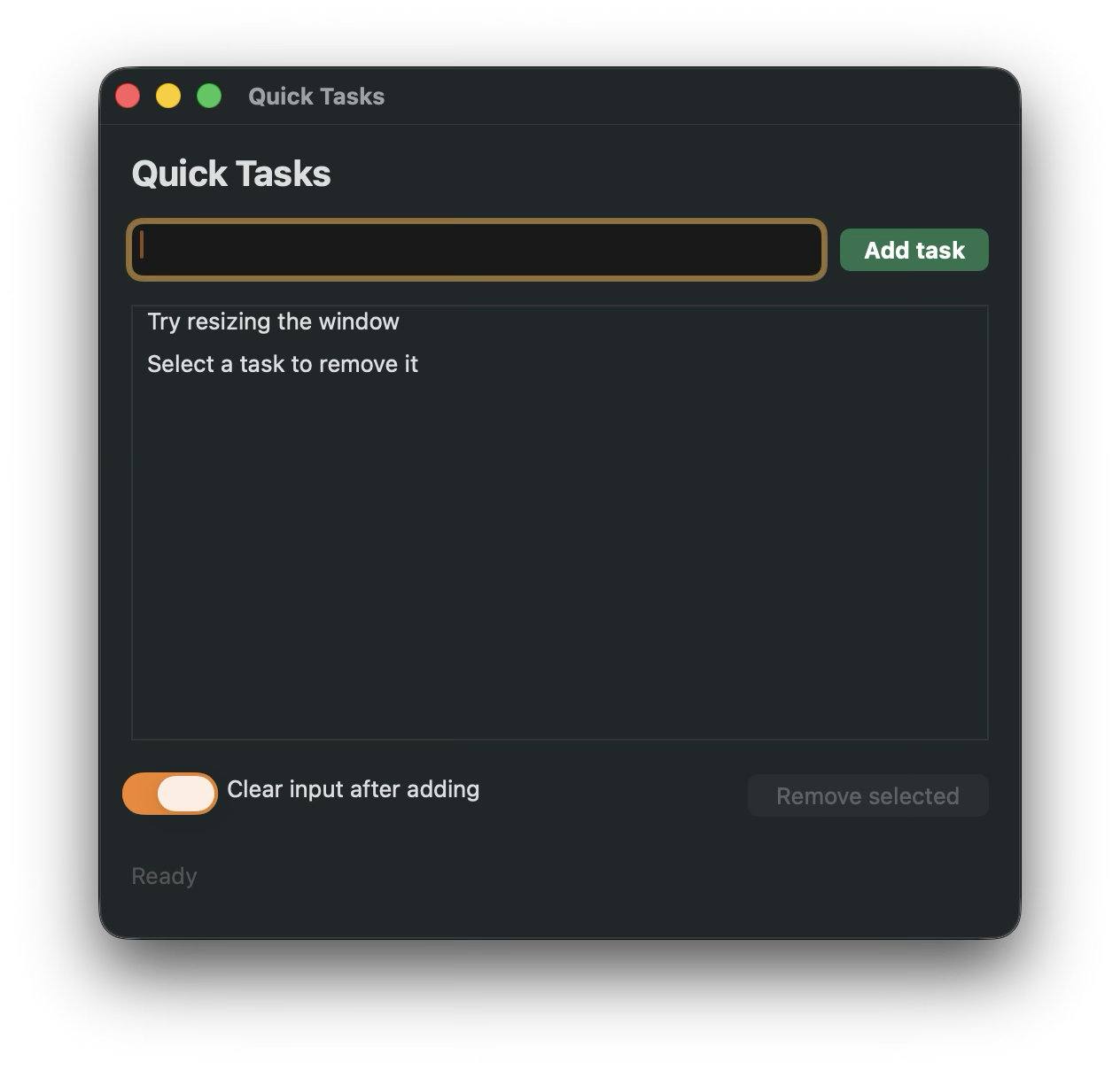
In addition, ZPEX now has a UI builder. Yup, you read correctly. A UI builder for ZPE and ZPEX. And it's clever. It works using an underlying C library I've written/am writing, which uses JNI to provide native bindings to AppKit, Win32, and GTK. UIs will, for the first time, look different across operating systems, rendering engines, and layout engines, but this is to be expected and is actually fine by me. Components are fully native this way. too. Here's an example of a program made on macOS using the new UI object.